
Adult Movie Theatres in Boston
Massachusetts · last checked 23 September 2026
Nothing is left in Boston proper. The nearest place with video booths is Stardust Video, four miles north in Everett, and it is a shop rather than a cinema. The two Washington Street houses came down in 1990 and 1996, and what survives downtown is a pair of strip clubs on LaGrange Street.
What is still open
Stardust Video
Booth arcade241 Beacham Street, Everett, MA 02149
- Booths
- Private, recently renovated
- Price
- $15 for two hours
- Hours
- 12pm to 8pm daily
- Phone
- (617) 389-3010
Booths rather than a screening room, four miles north of downtown. It is the closest thing greater Boston has to the old arrangement, and it is a shop with private booths at the back, not a cinema.
One warning about its own website: it still carries COVID-19 restriction notices and says the hours are modified “to allow for sanitizing”. That is why the hours above are marked as what the listing says rather than as fact, and why the dated signal here comes from people reviewing it this month instead of from the business itself.
Last checked 23 September 2026 · Listing refreshed September 2026
The two survivors on LaGrange Street are strip clubs. They are not theatres and there is no screen involved, so they are not listed here.
The Boston place that is not in Boston
Search for this and you will be sent, confidently, to the Boston Book & Adult Video Arcade: twelve video booths, two adult theatres with streaming screens, open from 10am to 2am, seven days a week. It is a real, working venue and it does everything the Zone used to.
It is at 2053 Boston Avenue, in Bridgeport, Connecticut, a hundred and fifty miles from Boston Common. The city is in the street name. It is the single most reliable way to get this city wrong, and most directories fall for it.
The city that zoned for it
The name came from a reporter. Jean Cole used “the Combat Zone” in the Boston Daily Record through the 1960s for the stretch of Washington Street between Boylston and Kneeland, where the street crime and the sailors on shore leave from the Charlestown Navy Yard made it read like somewhere a war had been.
In 1974 the Boston Redevelopment Authority made it official and designated those blocks the city’s adult entertainment district. It was the first time an American city zoned for this rather than against it, and the logic was containment: if it cannot be stopped, give it an address and keep it off every other street.
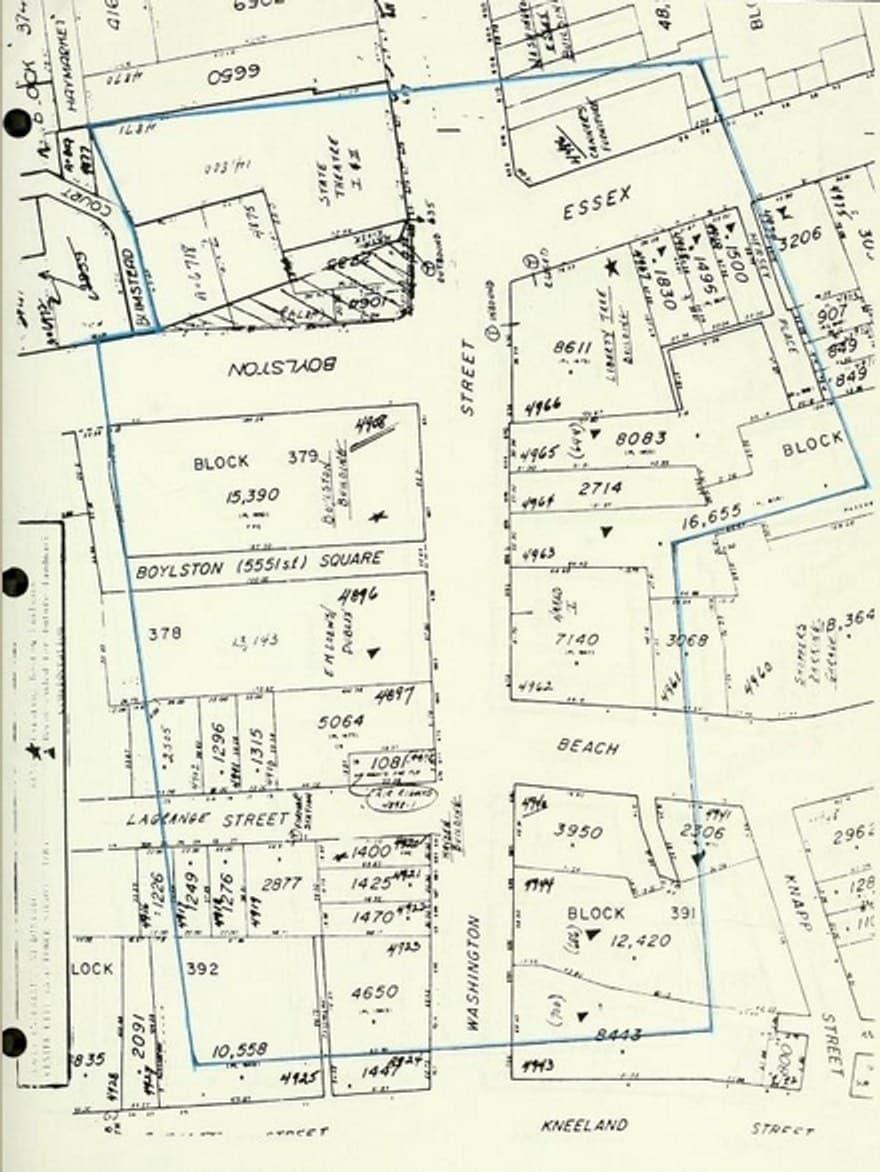
Inside the boundary were the Naked i Cabaret and its animated neon sign, Club 66, the Teddy Bear Lounge, the Two O’Clock Club, and the two big houses below.
Two cinemas on Washington Street
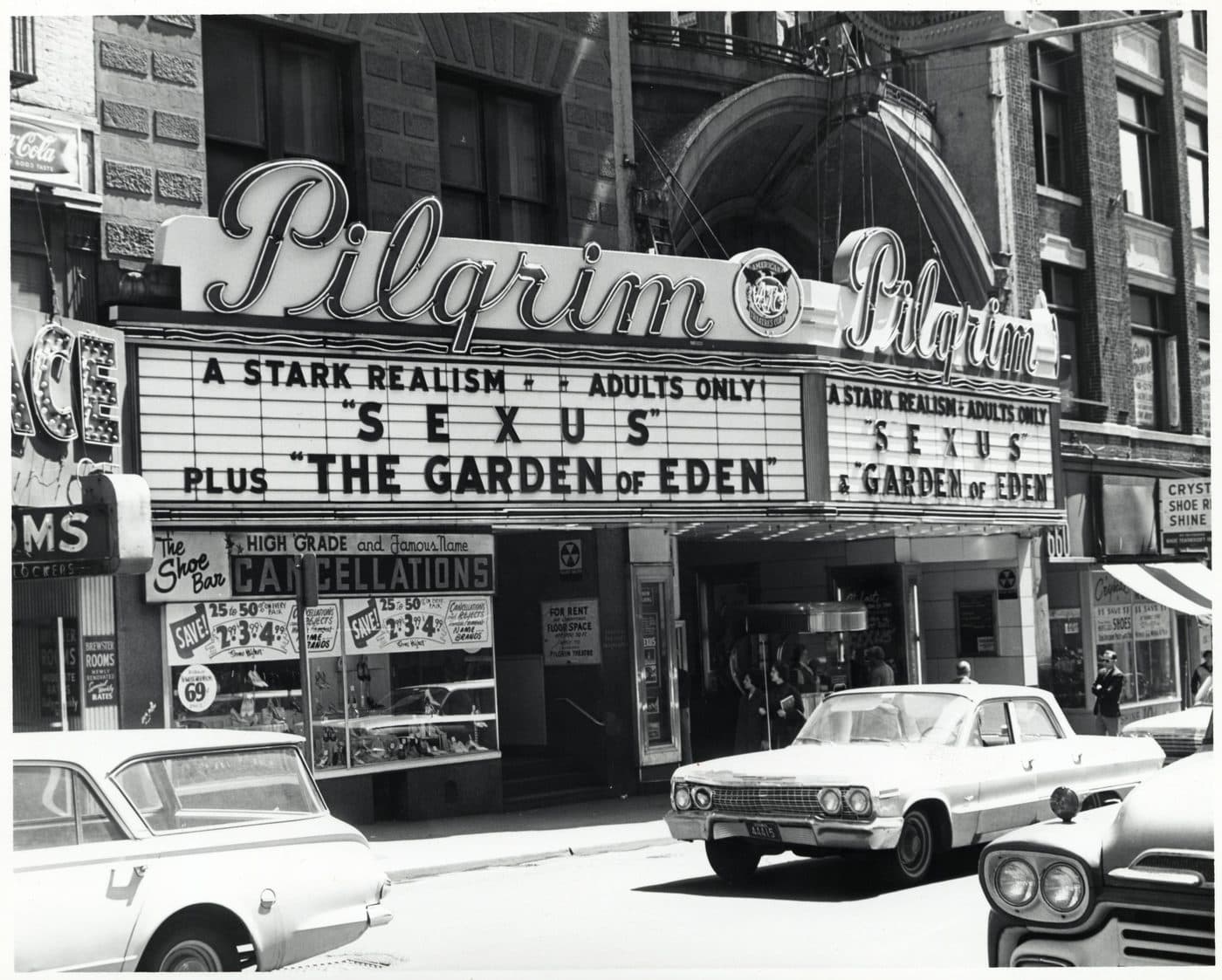
The Pilgrim at 658 Washington opened on 6 May 1912 as Gordon’s Olympia, a Clarence H. Blackall house with 1,500 seats doing photoplays and vaudeville. It took the Pilgrim name in January 1949 and finished its life on sexploitation films and live burlesque. Its most famous night was December 1974, when Congressman Wilbur Mills, chairman of House Ways and Means, climbed onto its stage to be introduced by the stripper Fanne Foxe.
The State at 617 was older still: it opened on 14 April 1879 as the Park Theatre and went through Minsky’s Park Burlesque, the Hub and the Trans-Lux before landing on its last name. It was showing adult films by the end of the 1950s, which makes it one of the earliest anywhere to do it, and it never went back.
What closed it was the rent
The Zone did not end in a raid. The Navy Yard closed and took the sailors with it. The AIDS crisis emptied the rooms. Home video, and then the internet, made the trip unnecessary. And downtown Boston became expensive, which is the part that actually finished it: land inside that 1974 boundary turned out to be some of the most valuable in the city.
- 617 Washington StreetThe State. Demolished 1990, first for a parking lot.
- 658 Washington StreetThe Pilgrim. Demolished 1996, now housing.
- The district itselfAn Emerson College dormitory, a Ritz-Carlton and luxury apartments.
Sources
- Combat Zone, Boston, Wikipedia
- Pilgrim Theatre, Cinema Treasures
- State Theatre, Cinema Treasures
- Boston's Adult Entertainment District zoning map, 1974
- Pilgrim Theatre marquee, City of Boston Archives
- Stardust Video, Everett
- Boston Book & Adult Video Arcade, Bridgeport CT
Something here wrong or out of date? Tell us and we will check it.