
Adult Cinemas in Saint-Étienne
Auvergne-Rhône-Alpes, France · last checked 24 November 2026
Vidéo Zapping, on the avenue Denfert-Rochereau in Châteaucreux, offers individual viewing booths and a shared room, 1.2 km by road from Saint-Étienne’s Hôtel de Ville.
Open in Châteaucreux, near the station, on the avenue Denfert-Rochereau
Vidéo Zapping
14 avenue Denfert-Rochereau, 42000 Saint-Étienne
- Has
- Private viewing booths and a shared room
- From the Hôtel de Ville
- 1.2 km by road
- Phone
- 04 77 41 07 25
Last checked 24 November 2026 · Its own site, 2025 to 2026
The Eden off the rue Blanqui, the Royal and Saint-Étienne’s other lost screens, 1882 to 2022
The Eden started out in 1882 as a theatre set deep inside its block, with a covered passage leading in from 3 rue Blanqui. Films joined its bill in 1903, and from 1938 it ran as a cinema full time, in one hall of 1,450 seats rising over three balconies. The Eden shut on 10 June 1968, came back on 29 April 1974 split into six screens, and closed for good on 29 April 2003. Demolition followed in 2021 and 2022.
At 33 avenue de la Libération, the Royal opened its doors on 23 April 1913 with 1,275 seats. In 1963 its capacity came down to about 1,000, and from 1983 the house worked as seven screens. The Royal closed on 6 January 2015 and was knocked down in 2016.
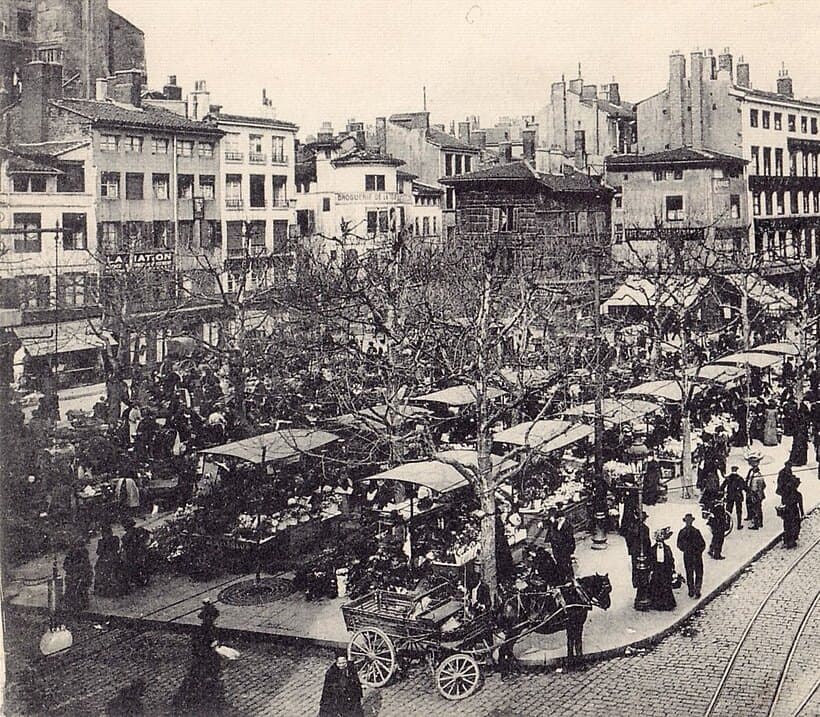
Three smaller houses had gone well before. The Astrée, at 18 rue du Général-Foy, opened on 5 May 1950 with 700 seats in a fan-shaped hall under a balcony, and closed on 28 September 1965. On the rue du 11-Novembre, where the Étoile-Théâtre had opened on 11 March 1910, the Capitole took over on 15 September 1938 with 317 seats and lasted until 31 December 1963. At 8 rue Dormoy, then the rue Marengo, the Théâtre Familia began on 5 December 1913 with plays and films. Renamed the Family in 1923, it showed talking pictures from May 1930, became the Rex in 1935, counted 990 seats in 1942 and closed on 12 October 1948.
In France at large, the Senate’s culture committee noted in November 1975 that two kinds of film were riding out the slump in cinema-going: disaster films and erotic-pornographic cinema. Then came the X classification (classement X), in the budget law for 1976 of 30 December 1975: under its articles 11 and 12, pornographic films and those that incite violence were to be listed apart. A year later the same committee reported that the classing of pornographic films had come into force on 21 January 1976.
The Loire préfet’s bans on crime films and the mayor’s 1925 arrêté on shows, 1913 to 1925
On 19 April 1913 the minister of the Interior asked every préfet to use the police powers of the communes law of 5 April 1884 to stop recent crimes from being shown by cinematograph anywhere in his département. The préfet de la Loire signed his arrêté on 28 April 1913 and cast it wider: in every place open to the public in the Loire it barred film shows of the doings or the execution of criminals and of immoral or repugnant practices, naming armed robbery, banditry and recent crimes among them.
The war brought a second text. On 20 January 1917 the préfet, at Saint-Étienne, wrote to the département’s public prosecutors about the sway that crime dramas on film held over the young, and the prosecutor at Roanne replied on 29 January. The arrêté of 19 February 1917 then forbade, throughout the Loire, any so-called police film showing the exploits of criminals or acts of banditry, real or imagined, together with the public posting of bills that announced such films. Bills already up were to be covered or torn down by the town authorities, and the 1913 arrêté stayed in force.
A décret of 25 July 1919 put every film other than newsreels under a visa from the minister of Public Instruction and Fine Arts, granted on the advice of a commission of thirty members. Its article 5 left standing the local police measures that public order might call for under the law of 1884.
Saint-Étienne’s mayor acted on 11 December 1925. His arrêté of that day made the staging of any play or the showing of any film depend on his written leave: each show had to be declared to him ten days ahead, and he could ask to read the script or to have the film screened for him beforehand.
Sources
- Vidéo Zapping, own website, 2025 to 2026
- Vidéo Zapping, PagesJaunes listing
- Vidéo Zapping, Google listing, November 2026
- Ciné-Façades, Eden, Capitole, Rex and Astrée (Saint-Etienne - 42), 2016 to 2020
- Cinema Treasures, Royal and L'Astree, Saint-Étienne
- salles-cinema.com, Cinéma Le Royal à Saint-Etienne, April 2011, revised February 2021
- pss-archi.eu, Cinéma L'Eden, Saint-Étienne, February 2023
- Sénat, avis n° 63 (1975-1976), Commission des Affaires culturelles, cinema, 20 November 1975
- Sénat, avis n° 66 (1976-1977), tome II, Commission des Affaires culturelles, cinema, 23 November 1976
- Conseil d'État, 2000, articles 11 and 12 of the finance law for 1976
- La Censure cinématographique, doctoral thesis in law, Faculté de droit de Paris, 7 March 1934
- La participation des associations à but idéal à l'exercice des actions publiques et civiles, doctoral thesis in law, Faculté de droit de Nancy, 23 April 1936
Something changed in Saint-Étienne?
Rooms close, hours move, prices go up and new places open. Tell us what is wrong on this page and we will check it and change it.